
I remember the exact moment I realized most homeowners have no idea what they’re really paying for when they get an asphalt driveway quote. I was standing on a job site in suburban Ohio, watching a homeowner’s face fall as he compared two estimates that were nearly $4,000 apart — with no idea why.
That moment has stayed with me for over two decades. The truth about asphalt driveway cost is that it’s not one number — it’s a combination of variables that can swing your total anywhere from $1,500 to $15,000 or more. And if you don’t understand what drives those numbers, you’re going to either overpay or end up with a driveway that fails in three years. I’ve seen both happen more times than I can count.
In this guide, I’m going to walk you through everything you need to know about asphalt driveway pricing in 2026 — from what the base rate really means, to the sneaky add-on costs that inflate quotes, to exactly when to hire a pro versus tackle it yourself. By the time you’re done reading, you’ll know more than most contractors want you to know.
Key Takeaways
- Average asphalt driveway installation costs $3–$7 per square foot in 2026, putting most residential projects between $3,000–$10,000
- A standard 2-car driveway (roughly 600 sq ft) runs $2,400–$4,800 for new installation
- Asphalt prices follow oil markets — costs in 2026 have stabilized after the volatility of 2022–2024
- Grading and base preparation can add $1–$3 per sq ft and is non-negotiable for driveway longevity
- Sealcoating every 2–3 years adds $0.15–$0.25 per sq ft but can double the life of your driveway
- Crack filling costs $100–$400 and should be done before cracks exceed ¼ inch width
- Full replacement is needed every 20–30 years; resurfacing every 10–15 years at roughly 50% of replacement cost
- DIY asphalt patching kits run $12–$40 per bag and work well for holes under 3 inches deep
- Always get at least 3 bids — any contractor who won’t measure your square footage on-site is guessing
Understanding Asphalt Driveway Cost: What You’re Actually Paying For
I’ve seen homeowners get burned because they thought asphalt cost was just about the black stuff on top. It’s not. When you break down a professional installation quote, you’re really paying for four distinct things: excavation and grading, the aggregate base, the asphalt mix itself, and labor. Each of those layers matters enormously to how long your driveway will last.
Asphalt — also called blacktop or bituminous concrete — is a petroleum-derived binder mixed with crushed stone aggregate. Because it’s tied to oil prices, asphalt costs fluctuate. In 2026, the market has settled into a more predictable range after the supply disruptions and inflation spikes of 2022–2024. You’re now looking at stable pricing that makes it a good time to plan your project.
Think of the base preparation like the foundation of a house. You wouldn’t build walls on unstable ground — and you shouldn’t pour asphalt on poorly graded soil either. The compacted aggregate base (typically 4–8 inches of crushed stone) distributes the load from vehicles and prevents the dreaded cracking and sinking that plagues cheap installations. I can always tell a budget job from a quality one within two winters.
Why does this matter for cost? Because dishonest contractors shave costs by skimping on base preparation. A quote that looks $1,000 cheaper might be cutting corners where it hurts most. Always ask your contractor specifically: how thick will the base be, and what compaction equipment will you use? asphalt pavement performance research by NAPA
Pro Tip: When comparing bids, ask each contractor for a written spec sheet — base depth, asphalt thickness, number of compaction passes, and type of asphalt mix. A contractor who can’t answer those questions in writing is a contractor to avoid.
Step-by-Step: How Asphalt Driveway Installation Actually Works
Understanding the process helps you evaluate quotes intelligently. Over the years, I’ve refined my own installation sequence to maximize longevity, and the best contractors all follow a similar approach.
Step 1: Site Assessment and Grading
Before a single scoop of material goes down, the existing soil needs to be evaluated and graded. This means excavating 8–12 inches below finished grade, removing organic material, and establishing proper slope — typically ¼ inch per foot — to direct water away from your home and prevent pooling.
Drainage problems are the number one killer of asphalt driveways. Poor slope causes water to sit on the surface, seep into micro-cracks, and freeze. One bad winter can undo five years of otherwise quality pavement.
Step 2: Sub-Base Installation and Compaction
A compacted layer of crushed stone aggregate (usually Class 5 or 6) is spread and mechanically compacted. In residential work, I recommend a minimum of 6 inches of compacted base; in cold climates like Minnesota or Maine where freeze-thaw cycles are severe, 8 inches is better. This step typically adds $1–$2 per square foot to your cost — but is absolutely worth every penny.
Step 3: Tack Coat Application
A thin layer of liquid asphalt emulsion — called a tack coat — is applied to help the new asphalt bond to the base. This is often skipped in rush jobs. Don’t let it be skipped on yours.
Step 4: Hot Mix Asphalt Application
Fresh hot mix asphalt (HMA) arrives by truck at 275–325°F and must be spread and compacted while still hot. Most residential driveways use a 2–3 inch thick layer of finish asphalt. Some specs call for a 4-inch total depth using a binder course followed by a surface course. The right asphalt mix for your climate matters — a coarser aggregate mix handles heavy loads better, while finer mixes give a smoother appearance.
Step 5: Compaction and Edge Work
A vibratory roller or plate compactor is used to compress the asphalt to its final density. Edges are raked and compacted by hand. A clean, straight edge is the mark of craftsmanship. The entire process typically takes one to two days for a standard residential driveway.
Step 6: Curing
Fresh asphalt needs 48–72 hours before light foot traffic and 7–14 days before you should park vehicles on it. Full curing — where the asphalt reaches maximum hardness — takes 6–12 months. During that first summer, avoid parking in the same spot repeatedly, as tires can leave indentations in soft asphalt.
Pro Tip: Schedule your installation for spring or early fall when temperatures are consistently between 50°F and 90°F. Asphalt installed in extreme heat or cold doesn’t compact properly — this is a mistake I see from contractors trying to extend their season artificially.
Asphalt vs. Concrete vs. Gravel: Key Differences and True Cost Comparison
I get asked constantly: “Should I go asphalt or concrete?” My answer depends on budget, climate, aesthetics, and how long you plan to stay in the home. Let me give you the full picture.
| Aspect | Asphalt | Concrete | Gravel |
|---|---|---|---|
| Installation cost | $3–$7 / sq ft | $6–$12 / sq ft | $0.50–$2 / sq ft |
| Lifespan | 20–30 years (maintained) | 30–50 years | Indefinite (top-ups needed) |
| Maintenance cost | $300–$600 every 3 yrs | Low (sealing optional) | $200–$600 every 5 yrs |
| Cold climate performance | Excellent — flexible | Good — can crack/heave | Excellent |
| Repairability | Easy, patch blends well | Patches visible, costly | Very easy |
| Appearance | Clean, classic black | Light, bright, decorative options | Rustic, natural |
| Time to use after install | 48–72 hrs (light use) | 7–10 days minimum | Immediate |
| 30-year total cost (600 sq ft) | ~$7,000–$11,000 | ~$6,500–$9,500 | ~$3,000–$5,000 |
Here’s my honest take: for cold climates — think the Northeast, Midwest, or Pacific Northwest — asphalt wins on performance. Its flexibility means it handles freeze-thaw cycles far better than concrete, which tends to crack along expansion joints. In hot climates like the Southwest, concrete may edge out asphalt since extreme heat can soften blacktop over time. And if budget is the overriding concern? Gravel remains the most economical option, though it brings its own maintenance headaches.
Pro Tip: If you’re planning to sell your home within 5 years, a freshly sealed asphalt driveway offers better ROI than concrete because the upfront cost is lower and the curb appeal improvement is immediate and significant.
Factors That Determine Your Asphalt Driveway Cost
Over 20 years, I’ve learned that no two driveway quotes should ever be identical — and when they are, someone isn’t doing their homework. Here are the real variables that move the needle on your final price.
Size and Dimensions
This is the biggest driver. A standard single-car driveway runs about 300–400 square feet; a two-car driveway is 400–600 square feet. Add a turnaround or basketball area, and you’re looking at 800–1,200 square feet. At $3–$7 per square foot fully installed, size alone can swing your quote by thousands.
Existing Driveway Removal and Disposal
If you’re replacing an existing surface — whether old asphalt, concrete, or pavers — removal adds $1–$2 per square foot. Concrete removal is on the higher end due to weight and disposal fees. Some contractors will mill and reuse old asphalt as a base layer, which can offset disposal costs and is environmentally responsible.
Grading Requirements
A flat, well-drained site costs less to prep. If your property has significant slope changes, drainage issues, or poor underlying soil, grading costs rise fast. Clay soils, for example, often require additional excavation and fill material to achieve proper drainage — adding $500–$2,000 to a project.
Asphalt Mix and Thickness
Standard residential asphalt is 2 to 3 inches thick. If you’re parking heavy trucks, RVs, or trailers, ask about a 4-inch application using a binder course plus surface course. The extra inch of asphalt adds cost but dramatically increases load-bearing capacity and longevity.
Regional Pricing and Local Market
Labor costs vary enormously by region. In high cost-of-living metro areas (San Francisco, New York, Seattle), you’ll pay the top of the $3–$7 range or above. In rural areas of the Midwest or South, $2.50–$4 per square foot installed is more common. Additionally, asphalt pricing follows local oil refinery proximity — areas far from refinery centers pay more for mix delivery.
Time of Year
Asphalt contractors are busiest in late spring and early fall — expect 3–6 week wait times and potentially higher prices during peak season. Scheduling for early spring or late summer can sometimes yield modest discounts and faster turnaround.
Pro Tip: Many contractors offer end-of-season pricing in September and October to keep crews busy. If you’re in a mild climate and can wait, you can often negotiate 10–15% off late-season installs. Just ensure temperatures will stay above 50°F for at least a week after installation.
Cost Analysis: What to Expect at Every Budget Level
Let me put real numbers on the table. I’ve broken down typical project costs based on driveway size and scope so you can benchmark what you’re being quoted.
| Project Type | Size (sq ft) | Low Estimate | High Estimate | Notes |
|---|---|---|---|---|
| Single-car driveway (new) | 300–400 | $1,800 | $3,200 | Includes base prep |
| Two-car driveway (new) | 500–600 | $3,000 | $5,500 | Standard installation |
| Two-car + turnaround | 800–1,000 | $5,000 | $9,000 | Grading may add cost |
| Long rural driveway (200 ft) | 1,600–2,400 | $6,000 | $15,000+ | Varies by road condition |
| Resurfacing (existing base) | 500–600 | $1,500 | $3,500 | Base must be sound |
| Sealcoating (maintenance) | 500–600 | $200 | $450 | Every 2–3 years |
| Crack filling (DIY or pro) | Per linear foot | $100 | $400 | Do before cracks widen |
These figures reflect 2026 market pricing across most U.S. regions. If your quotes are significantly above these ranges, push back and ask for a line-item breakdown. If they’re well below, ask why — and probe the base preparation specs carefully.
Average driveway paving costs from This Old House
Pro Tip: Always ask contractors if they’re using recycled asphalt (RAP — reclaimed asphalt pavement) in the mix. RAP is environmentally friendly and can lower material costs, but should only be used in base layers or binder courses — not as the finished surface. A reputable contractor will be upfront about this.
Professional vs. DIY: Making the Right Choice for Your Driveway
I’ll be direct here: full driveway installation is not a DIY project. Hot mix asphalt requires a paving machine or at minimum a hand screed, a vibratory roller, and the ability to transport and pour material at temperature. Without that equipment, you simply cannot achieve proper compaction — and an improperly compacted driveway will fail within a few years.
That said, there are absolutely things a capable homeowner can DIY.
What You Can DIY Successfully
Crack filling: If cracks are under ¼ inch wide and you catch them early, cold-pour crack filler (available at any home improvement store for $8–$15 per tube) works well. Clean the crack with a wire brush, blow out debris, and fill slightly overfull, then tamp flat. This is exactly what I’d recommend to my own neighbors.
Pothole patching: Cold patch asphalt products like QUIKRETE Blacktop Patch or Sakrete QR Blacktop fill potholes up to 3 inches deep. A 50-lb bag runs $20–$35 and can patch several square feet. Tamp firmly with a 2×4 or hand tamper — or drive over it repeatedly if you have a large vehicle. Results won’t look perfect, but they prevent water infiltration while you plan bigger repairs.
Sealcoating: This is the one maintenance task most homeowners can do themselves, though professional application gives more even, lasting results. DIY driveway sealer (coal tar or asphalt-based) runs $15–$30 per 5-gallon bucket, covering roughly 250 square feet. Apply on a dry day above 50°F with temperatures staying warm for 24 hours. Clean the driveway thoroughly first — any oil stains need a degreaser treatment or the sealer won’t bond.
What You Should Always Hire Out
New installation, full resurfacing, and any work involving significant grading or drainage should go to a licensed contractor. The risk of poor compaction, drainage failure, or improperly sloped surfaces is too high — and the damage those failures cause to your foundation, landscaping, and home’s value far exceeds any labor cost savings.
Pro Tip: When hiring a contractor, verify they carry liability insurance and workers’ compensation — ask for certificates, not just verbal assurance. A crew working without insurance on your property means you’re liable for injuries. This is the single most commonly skipped verification step I see homeowners make.
Common Mistakes to Avoid
After two decades, I’ve watched homeowners make the same expensive mistakes over and over. Learning from other people’s errors is free — here are the ones that will cost you the most if you repeat them.
Skipping Sealcoating
Sealcoating is like sunscreen for your driveway. UV rays, gasoline, oil, and water all degrade asphalt binder over time — sealcoating creates a protective barrier that slows this dramatically. A driveway that’s never sealcoated typically needs replacement in 12–15 years. One that’s properly maintained can last 25–30 years. That’s potentially a $5,000–$8,000 difference in replacement cost avoided, for a maintenance investment of maybe $1,500 over its life. The math is obvious.
Waiting Too Long to Fill Cracks
A hairline crack is a $5 problem. A 1-inch crack with grass growing through it is a $500 problem. An alligator-cracked section is a $2,000+ mill-and-fill job. Water enters cracks, saturates the base, freezes, expands, and turns small problems into major failures with shocking speed — especially in Northern climates where freeze-thaw cycles happen 30–60 times a winter.
Choosing the Cheapest Bid
I’ve seen this end badly more times than I can count. A dramatically low bid almost always means one of three things: thin asphalt, minimal base prep, or an unlicensed crew. Any of those will result in premature failure. I always tell homeowners: get three bids, throw out the highest and lowest outliers, and evaluate the middle bidder on their specs and references — not just their price.
Installing in Poor Conditions
Asphalt installed on rain-softened soil, during freezing temperatures, or on a hot day without adequate rolling is a recipe for failure. If a contractor wants to push through a job in questionable weather to hit a deadline, that’s a red flag. Quality work waits for good conditions.
Ignoring Drainage Design
A driveway that slopes toward your house, pools water in the center, or funnels runoff into your foundation is a disaster waiting to happen. Any professional should be designing positive drainage away from structures. If they’re not talking about drainage, ask about it directly.
Maintenance Tips and Best Practices
A well-maintained asphalt driveway is one of those home features that quietly adds value year after year. Here’s the maintenance schedule I recommend to every homeowner I work with.
Year 1: Let It Cure
New asphalt is vulnerable. Avoid parking in the same spot repeatedly for the first full summer — rotating positions prevents tire marks. Don’t use kickstands, bike stands, or high heels on fresh asphalt in summer heat. Keep lawn irrigation away from edges. Do not sealcoat for at least 12 months — you need the oils to cure out of the fresh asphalt first or the sealer won’t bond properly.
Years 2–3: First Sealcoating
Between 12 and 24 months after installation, schedule your first professional or DIY sealcoating. Fill any minor cracks first with elastomeric crack filler, let it cure 24 hours, then apply sealer. This is the most impactful maintenance event in your driveway’s early life.
Ongoing: Every 2–3 Years
Reseal on a 2–3 year cycle. If you live somewhere with harsh winters or significant UV exposure (Southwest desert climates), trend toward the 2-year end of that range. If you’re in a mild coastal area, 3 years is fine. Inspect annually in spring after winter to catch any new cracks that formed during freeze-thaw season.
Years 15–20: Consider Resurfacing
If the base is still sound but the surface has worn or cracked significantly, resurfacing (also called overlaying) applies a new 1.5–2 inch layer of asphalt over the existing surface. This extends life another 10–15 years at roughly 40–60% of full replacement cost. A good contractor will probe the existing base to ensure it can support a new layer before recommending this approach.
Pro Tip: Address oil stains from vehicles immediately — they soften and degrade asphalt binder on contact. Cat litter absorbs fresh oil spills; follow with a commercial degreaser and rinse thoroughly before sealcoating. One neglected oil leak can create a soft spot that grows into a pothole within two seasons.
Frequently Asked Questions About Asphalt Driveway Cost
How much does it cost to pave a 2-car driveway with asphalt in 2026?
A standard 2-car asphalt driveway (approximately 500–600 square feet) runs $3,000–$5,500 fully installed in 2026, including base preparation and labor. Larger driveways with turnarounds or long approaches can reach $9,000–$15,000. Regional labor costs, access difficulty, and existing site conditions all affect the final price.
How long does an asphalt driveway last?
With proper installation and regular maintenance (sealcoating every 2–3 years, crack filling as needed), an asphalt driveway typically lasts 20–30 years. Neglected driveways may need replacement in as little as 12–15 years. Climate plays a major role — harsh freeze-thaw cycles accelerate wear significantly.
Is it cheaper to resurface or replace an asphalt driveway?
Resurfacing costs roughly 40–60% of full replacement — typically $1,500–$3,500 for a standard driveway versus $3,000–$7,000+ for full replacement. Resurfacing only works if the existing base is still structurally sound. If the base has deteriorated or is severely alligator-cracked, resurfacing over it is throwing money away — replacement is necessary.
What is the best time of year to pave an asphalt driveway?
Late spring (May–June) and early fall (August–September) are ideal. Air and ground temperatures should be consistently above 50°F, with no rain in the 24-hour forecast after installation. Avoid midsummer in hot climates where extreme heat can complicate rolling, and avoid fall installs where temperatures may drop below freezing before the asphalt fully cures.
Can I get an asphalt driveway estimate online?
Online calculators can give ballpark estimates, but they cannot account for your specific site — slope, drainage, soil condition, accessibility, and existing surface removal all affect real cost significantly. I always recommend getting at least 3 in-person bids from licensed local contractors who physically measure your property. Any quote given without a site visit should be treated as a rough placeholder only.
How do I know if I need a full replacement or just repairs?
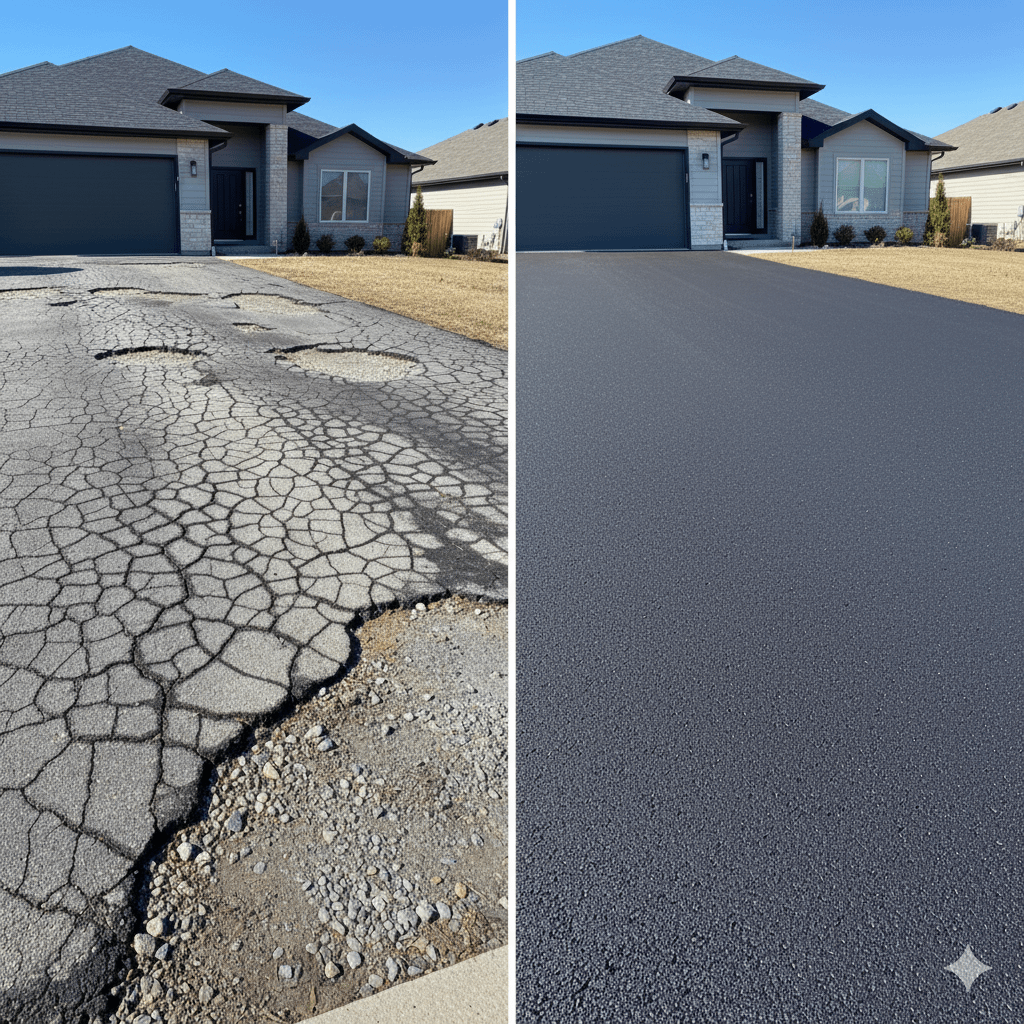
If less than 25% of your driveway surface has distressed areas (cracks, potholes, minor alligator cracking), repairs and sealcoating are usually cost-effective. If you’re seeing widespread alligator cracking (which indicates base failure), significant sinking, or more than 35–40% of the surface is damaged, replacement is almost always the better long-term investment. A reputable contractor will give you an honest assessment — get a second opinion if you’re unsure.
Does adding an asphalt driveway increase home value?
Yes — a well-maintained paved driveway consistently improves curb appeal and appraisal value. Real estate professionals generally cite a 5–10% improvement in first impression assessments for homes with clean, freshly sealed driveways versus cracked or gravel surfaces. In competitive real estate markets, it can directly influence offer amounts. The ROI is particularly strong when you’re planning to sell within 3–5 years.
Making the Right Decision for Your Driveway
After 20+ years working in asphalt, I can tell you that the homeowners who get the best results are the ones who do three things: they educate themselves before getting quotes, they prioritize quality installation over the lowest bid, and they commit to the simple maintenance schedule that keeps their investment protected.
Asphalt driveway cost in 2026 is reasonable by historical standards — we’re in a stable pricing environment that makes this a good time to plan your project. Whether you’re putting in a new driveway, resurfacing an aging one, or just getting on top of maintenance you’ve been putting off, the key numbers to remember are $3–$7 per square foot installed, 2–3 years between sealcoats, and ¼ inch as the maximum crack width before you absolutely need to fill it.
I genuinely recommend consulting with at least two or three local, licensed contractors before making any decisions. Bring this guide to those conversations — ask about base depth, compaction equipment, drainage design, and mix specs. A contractor who welcomes those questions is one who’s proud of their work. One who deflects them is showing you something important about how they operate.
Take care of your driveway and it will take care of you for decades to come. A little attention every few years is all it takes to get full value from one of the most-used surfaces on your property.