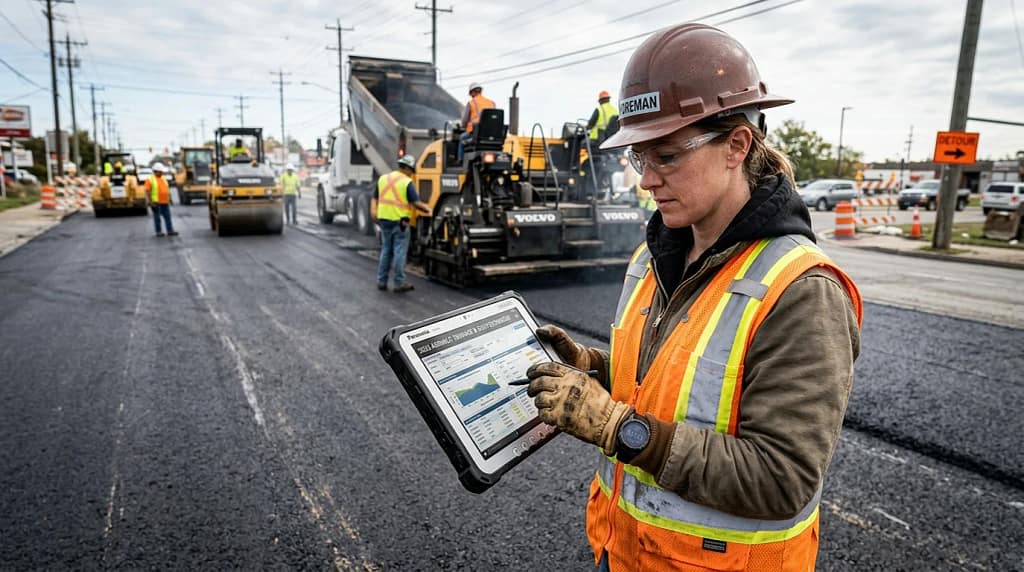
Planning a paving project in 2026? Use our precision tool to calculate the exact Hot Mix Asphalt (HMA) tonnage required and get real-time cost projections based on current market rates.
Estimated Tonnage: Enter dimensions above to see result.
Estimated 2026 Cost: $7.00 – $15.00 per sq. ft. (Installed)
*Estimates include material, labor, and basic site preparation. Costs vary by region and oil prices.
Why Accurate Tonnage Estimation Matters in 2026
As we move through 2026, the asphalt industry continues to face significant shifts. The era of predictable, low-cost paving has transitioned into a market defined by the volatility of liquid asphalt binder prices and rising logistics costs. Whether you are a homeowner planning a new driveway or a property manager overseeing a parking lot, understanding your 2026 Asphalt Tonnage & Project Cost Estimator results is the first step toward a successful project.
An accurate calculation prevents two major issues: over-ordering, which leads to wasted material costs, and under-ordering, which creates “cold joints” in your pavement—weak spots where new hot asphalt is laid against cooled material. To get the best results, you must balance the square footage with the intended usage of the surface.
2026 Market Realities
Current data indicates that liquid asphalt binder has stabilized at $542.50 – $569.00 per ton. This serves as the price floor for all Hot Mix Asphalt (HMA) production. For residential homeowners, this translates to an average installed cost of $7.00 to $15.00 per square foot for full replacements.
For more detailed information on total project budgeting, visit our Asphalt Driveway Cost Guide.
Key Tonnage Variables
- Density: Standard asphalt weighs approximately 145 lbs per cubic foot.
- Waste Factor: We recommend adding a 5-10% waste factor to account for compaction and edge loss.
- Compaction: Remember that “loose” asphalt from the plant will compact by approximately 25% once rolled.
How the 2026 Asphalt Tonnage & Project Cost Estimator Works
Our calculator uses the industry-standard formula to ensure your quotes from contractors are fair and accurate. The mathematics behind asphalt estimation is based on volume and density.
The Tonnage Formula
To calculate the base tonnage required for your project, our tool uses the following logic:
Area (sq. ft.) × Desired Depth (inches) × 0.00604 = Total Tons
This formula assumes a standard density of 145 lbs/cu. ft. If you are calculating for a 1,000-square-foot driveway at a standard 3-inch thickness, you will need approximately 18.12 tons of material.
Thickness Recommendations for 2026
Choosing the right thickness is vital for longevity and cost-efficiency. Over-engineering leads to unnecessary expenses, while under-engineering leads to premature asphalt cracking.
- 2 Inches (Overlay): Used primarily for resurfacing an existing, stable base. This requires roughly 6.1 tons per 1,000 sq. ft. Learn more about this in our Asphalt Overlay Guide.
- 3 Inches (Standard Residential): The gold standard for most cars and light SUVs. Requires approximately 9.2 tons per 1,000 sq. ft. per layer (often split into a binder and top coat).
- 4 Inches (Heavy-Duty Residential): Recommended for properties with large trucks, delivery vans, or heavy SUVs. This requires approximately 12.2 tons per 1,000 sq. ft.

Beyond the Material: Understanding 2026 Labor & Prep Costs
While the 2026 Asphalt Tonnage & Project Cost Estimator provides a solid baseline for material costs, it’s important to remember that the asphalt itself is often only 40-60% of the total quote. The remaining costs are attributed to labor, equipment, and site preparation.
Site Preparation & Grading
If you are installing a brand-new driveway, the sub-base is the most critical element. Site preparation (grading, excavation, and stone base installation) typically adds 20–40% to the base material quote. Without a solid foundation, even the highest quality asphalt will fail within years.
If you are repairing an existing surface, you may want to look into expert pavement repair before committing to a full replacement.
Regional Price Variances
Asphalt prices are not uniform across the country. In 2026, we see the following trends:
- West Coast: $110–$140 per ton (Higher due to environmental regulations).
- Midwest/South: $85–$125 per ton (More stable supply chains).
- Northeast: High volatility due to seasonal refinery cycles and diesel fuel prices.
Protecting Your 2026 Investment
Once you have used the 2026 Asphalt Tonnage & Project Cost Estimator and completed your project, the work isn’t over. Proper maintenance can double the lifespan of your pavement. In the 2026 economy, proactive maintenance is significantly cheaper than a total rip-and-replace.
The Role of Sealcoating
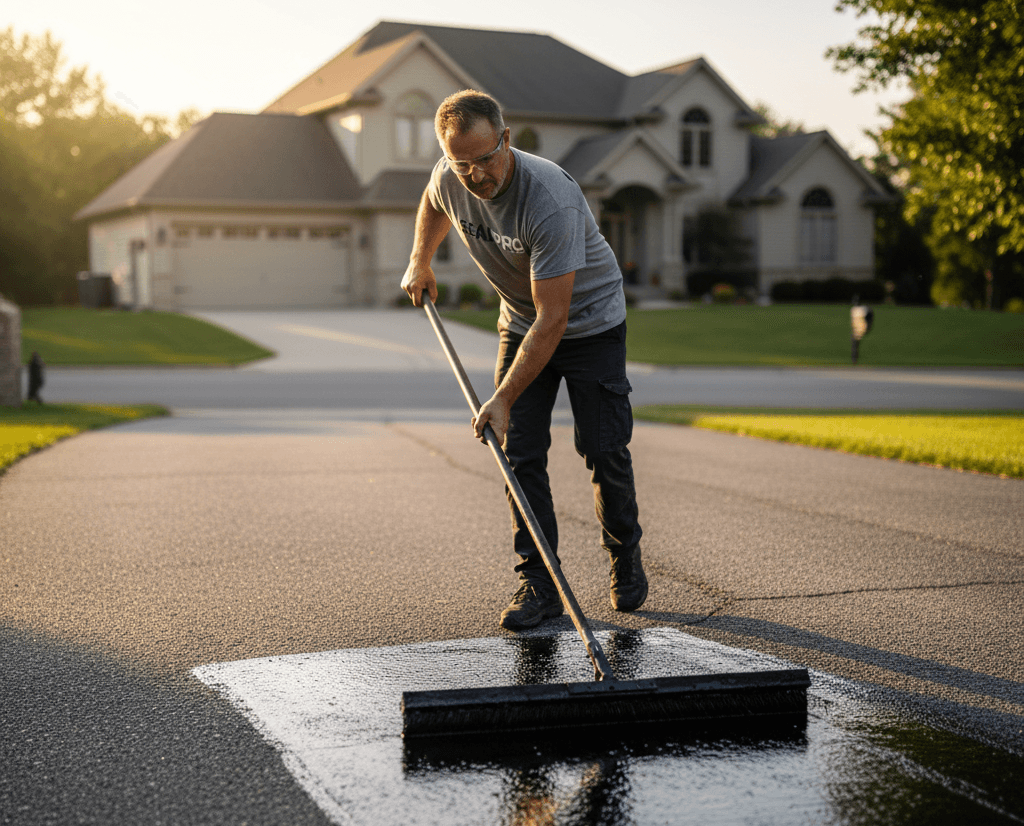
Sealcoating provides a protective layer against UV rays, water penetration, and automotive fluids. For a new 2026 installation, you should wait approximately 6 months before applying your first coat to allow the oils to cure. For guidance on this process, check our Essential Sealcoat Guide.
Managing Water Damage
Standing water is the enemy of asphalt. Ensure your project includes proper grading to direct water away from the surface. We provide 5 tips for preventing water damage that every homeowner should read before their contractor leaves the site.
Frequently Asked Questions
How many tons of asphalt do I need for a 1,000 sq. ft. driveway?
For a standard 3-inch thick residential driveway, you will need approximately 18.12 tons of Hot Mix Asphalt. If you increase the thickness to 4 inches for heavy-duty use, you will need roughly 24.16 tons.
How many square feet does 1 ton of asphalt cover?
Coverage depends entirely on thickness. At 2 inches thick, 1 ton covers approximately 120 sq. ft. At 3 inches thick, it covers about 80 sq. ft., and at 6 inches thick, it covers only 40 sq. ft.
What is the average cost of a driveway in 2026?
A standard 600-square-foot residential driveway (roughly 20′ x 30′) currently averages approximately $5,265 for a full professional installation, including site prep and materials.
Should I choose asphalt or concrete for my 2026 project?
Asphalt is generally cheaper upfront and handles freeze-thaw cycles better, while concrete has a longer lifespan but higher initial costs. You can read our detailed comparison here: Asphalt vs. Concrete Driveways.
When is the best time of year to pave?
Paving requires warm ground temperatures (usually 50°F and rising). In most regions, the paving season runs from late spring through early fall. Attempting to pave in the winter often leads to poor compaction and premature failure.